Encounter World Religions Visits Agama Meditation Centre for a Morning of Early Buddhist Learning and Practice
July 2026 | Toronto
Agama Meditation Centre was delighted to welcome guests from Encounter World Religions for a morning of learning, dialogue, and shared meditation practice.

Agama Meditation Centre is a registered Canadian charity dedicated to early Buddhist practice through meditation education, study, and community cultivation.
Rooted in the Āgamas, the Centre approaches the early Buddhist discourses not only as ancient scriptures, but as living guidance for meditation, ethical cultivation, and daily life.
The visit began with an introduction to the Centre’s mission and practice approach.
Volunteers shared how the Āgamas preserve early Buddhist teachings across ancient Buddhist traditions, and how these teachings continue to guide direct observation, mindful awareness, and the transformation of conduct today. As one of the slides summarized: “Scripture is a map, not the journey. Practice brings the teaching into lived experience.”
Introducing Early Buddhist Practice
During the presentation, guests were introduced to the heart of early Buddhist teaching: the possibility of understanding suffering, seeing its causes, and cultivating freedom from suffering. The session highlighted the Four Noble Truths as a practical framework: suffering, its cause, its cessation, and the path of training in ethics, collectedness, and wisdom.
The presentation also explored why we meditate. In early Buddhism, meditation begins with the observation that human life includes dukkha—not only extreme pain, but also everyday stress, dissatisfaction, anxiety, disappointment, reactivity, and the habit of clinging to what we like and resisting what we dislike. Meditation helps us pause, observe experience clearly, interrupt reactivity, and respond with greater wisdom.

A Teaching on Truthfulness and Right Speech
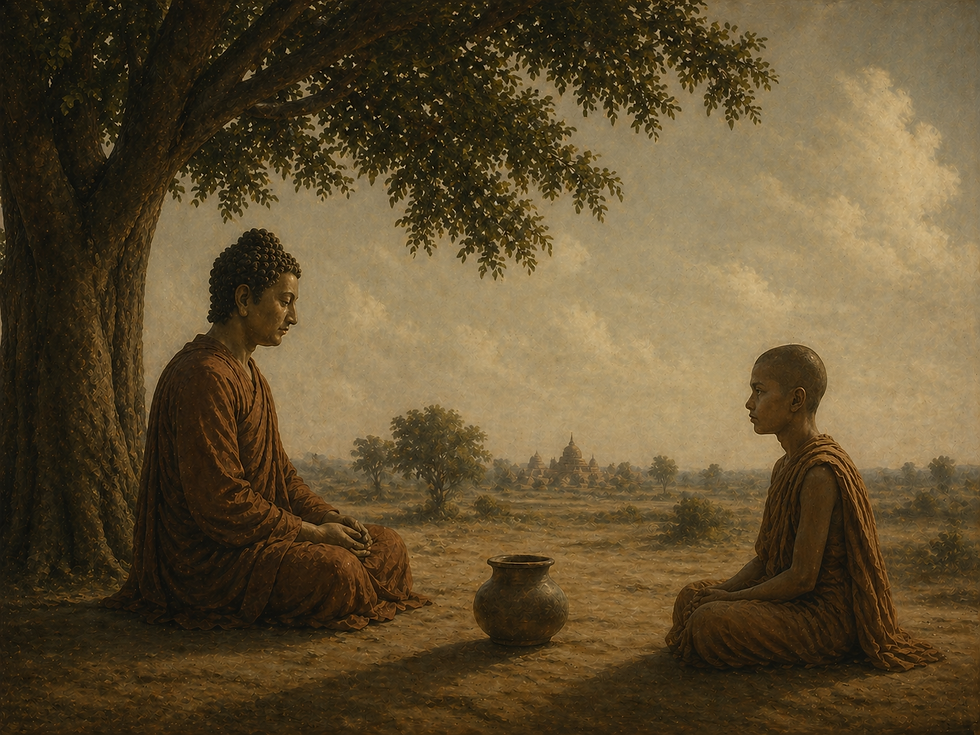
One special focus of the visit was the Buddha’s instruction to Rāhula on truthfulness and mindful conduct. Guests learned how the Buddha taught Rāhula to examine speech before, during, and after they occur: to check intention, observe the mind, and reflect on the outcome.
This teaching was presented not only as a moral lesson, but as a form of mindfulness training. Truthfulness becomes a clear mirror for observing body, speech, and mind without self-deception, allowing genuine inner transformation to take place.
Many guests expressed appreciation for the simplicity and depth of early Buddhist wisdom, especially how practical and direct the teachings are when brought into everyday life.
Experiencing Loving-Kindness Meditation
After the presentation, everyone was invited to experience a short guided loving-kindness meditation. The practice introduced mettā as a gentle training in relating to ourselves without anger, harshness, or inner violence. Guests were guided to bring loving-kindness into the body through simple phrases such as:
May my heart be free from anger.
May my heart be free from suffering.
May my body be free from illness.
May I live with peace and happiness.
The practice emphasized that loving-kindness is not forced positivity. Rather, it is a way of turning the mind and body toward care, peace, and non-hatred. Participants were guided to let kindness move through the body—from head to foot and from foot back to head—before gradually widening the circle of goodwill from oneself to loved ones, community, and all beings.
Thoughtful Questions and Meaningful Dialogue
The visit concluded with an open discussion. Guests asked thoughtful questions about the difference between early Buddhist mindfulness and modern mindfulness, how Buddhist practice relates to daily life, and how a sense of humor can support spiritual cultivation.
The conversation reflected the spirit of the morning: open, sincere, and grounded in practice.
As the final reflection slide noted, the Buddha’s teaching begins with suffering; meditation is the training of the mind; practice includes ethics, collectedness, and wisdom; and loving-kindness softens the heart by helping us relate to ourselves and others with less anger and more care.
Gratitude
We extend our heartfelt thanks to Encounter World Religions for visiting Agama Meditation Centre and sharing this meaningful morning with us.
May our study and practice help the Dharma become not only something we learn about, but something we live—through compassion, calmness, clarity, and freedom from suffering.


Comments