What Should We Trust?
Updated: Jul 31
The Kālāma teaching in the Madhyama Āgama on doubt, discernment, and finding a safe place to stand
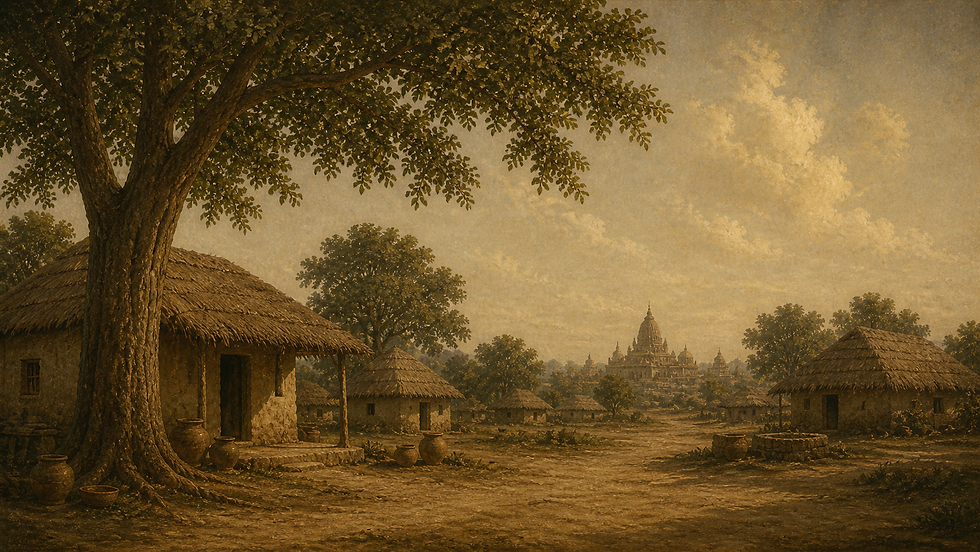
Teachers were passing through the town of the Kālāmas. Each praised his own teaching. Each criticized the teachings of others. The more the Kālāmas listened, the less certain they became.
Who was speaking truth?Who was speaking falsehood?Whom should they trust?
This is the situation behind the Kālāma teaching preserved in the Chinese Madhyama Āgama as the 伽蓝经. Its close Pāli parallel is found in Aṅguttara Nikāya 3.65, often known as the Kālāma Sutta. The scene is ancient, but the question is unmistakably modern: in a world of competing teachers, traditions, and claims, how do we know what is worthy of trust?
A village full of teachers
The Kālāmas are not asking an abstract philosophical question. They are ordinary people trying to live wisely amid conflicting religious voices. Some ascetics and brahmins come to Kesamutta and promote their own doctrines while dismissing others. Then other teachers arrive and do the same. The result is not clarity, but doubt.
Their question to the Buddha is direct: Who is telling the truth?
Today the situation feels familiar. Teachers may no longer arrive only on foot at the edge of a village; they arrive through books, videos, podcasts, meditation apps, institutions, and online communities. Each voice asks for confidence. The Kālāmas’ confusion is our own.
The problem with unresolved doubt
The Buddha does not blame the Kālāmas for being uncertain. Their doubt has causes. But he also does not treat doubt as wisdom.
In the Madhyama Āgama version, the Buddha points out that doubt gives rise to hesitation. When the mind remains caught in uncertainty, it cannot clearly decide what should be abandoned and what should be cultivated. The Kālāmas lack 净智, a clear and purified knowing that can distinguish wholesome from unwholesome, harmful from beneficial.
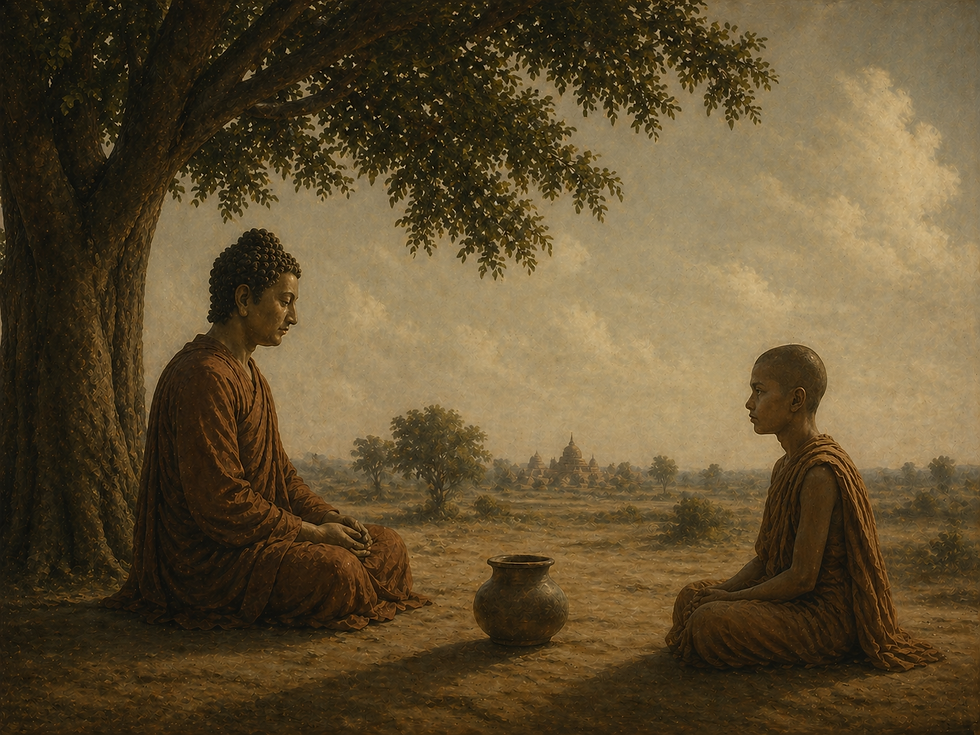
This is the first turning point of the dialogue. The Buddha does not say, “Believe me because I am the Buddha.” Nor does he say, “Remain in doubt.” He teaches them how to move from uncertainty to discernment.
Not blind faith, not blind doubt
The most famous part of this discourse is the Buddha’s warning not to rely blindly on authority. In the Pāli parallel, he tells the Kālāmas not to go merely by oral tradition, lineage, scripture, logic, inference, reasoning, personal preference, the appearance of competence, or the thought, “This ascetic is our teacher.”
This is sometimes read as a modern slogan for radical individualism: “Believe only what seems right to you.” But the discourse is more careful than that.
The Buddha is not rejecting tradition, scripture, reason, or teachers. He is saying that none of them, by itself, is sufficient. A teaching must be examined by its effects.
Does it increase greed, hatred, and delusion?Does it lead to harm and suffering?Is it criticized by the wise?Or does it lead to welfare, clarity, harmlessness, and peace?
The Buddha is not teaching blind faith. But neither is he teaching blind doubt. He is teaching ethical discernment.
Look at what greed does
The Buddha brings the question down from competing doctrines to direct observation.
What happens when greed arises? What happens when hatred or delusion takes over the mind?
The Kālāmas can see the answer. A person overcome by greed, hatred, or delusion may kill, steal, engage in sexual misconduct, lie, and encourage others to do the same. These mental states are not private abstractions; they shape conduct and produce suffering.
This is the Buddha’s method. He does not ask the Kālāmas to solve every metaphysical dispute first. He asks them to observe causes and consequences. A teaching that strengthens greed, hatred, and delusion leads toward harm. A teaching that weakens them leads toward freedom.
Truth is how we live
The Madhyama Āgama version develops this point through the purification of body, speech, and mind. The noble disciple abandons killing, stealing, sexual misconduct, false speech, divisive speech, harsh speech, idle chatter, covetousness, ill will, and wrong view.
This is one of the most practical features of the Chinese version. Discernment is not merely intellectual. It must become visible in conduct.
The section on speech is especially relevant. The practitioner gives up falsehood, divisive language, rough speech, and frivolous talk. In their place, speech becomes truthful, timely, gentle, beneficial, and conducive to peace.
In a world of constant commentary and online argument, this is not a minor teaching. The Buddha is showing that truth is not proven by cleverness or intensity. It is proven by purification.
A place to stand
The Kālāmas ask whom they should believe. The Buddha gives them something deeper: a place to stand.
Not a sectarian identity.
Not a slogan.
Not a demand for immediate certainty.
He gives them a way to begin: abandon what leads to harm; cultivate what leads to welfare and happiness. When body, speech, and mind are purified, the practitioner is no longer so easily pushed around by competing claims.
The teaching notes attached to the Madhyama Āgama reading emphasize this point strongly. We are always looking for a place to live: a better city, a better country, a better environment. But the discourse points to another kind of dwelling: dwelling in Dharma, in wholesome conduct, in right view, in the boundless heart, and in the four secure abidings.
The question is no longer only, “What should I believe?”
It becomes: Where can the mind safely rest?

Discernment becomes a boundless heart
After teaching the Kālāmas how to discern wholesome from unwholesome, the Buddha leads them into the four boundless states: loving-kindness, compassion, appreciative joy, and equanimity.
The noble disciple, free from desire, ill will, and confusion, spreads a heart of loving-kindness in all directions, then compassion, then joy, then equanimity: abundant, expansive, immeasurable, free from enmity and ill will.
This is a crucial movement in the discourse. The Buddha’s teaching on discernment does not end in skepticism. It ripens into a mind without hostility.
In the Madhyama Āgama language, the practitioner’s mind becomes vast, without knots, resentment, anger, or conflict. True discernment does not make the heart narrow. It makes it spacious.
Four ways the heart becomes safe
The discourse then presents the four secure dwellings, or four consolations.
If there is another world, and if good and bad actions bear fruit after death, then one who lives rightly may be reborn in a good destination. If there is no other world, and actions do not bear fruit after death, such a person still lives here and now free from hatred, ill will, and inner trouble. If suffering comes to those who do evil, one who does no evil has no reason to fear. And if suffering does not come to those who do evil, one still sees oneself as pure on both sides.
The Buddha is not asking the Kālāmas to force certainty about every unseen matter before they begin practicing. He shows them that a life of non-harming, clarity, and goodwill is already secure.
This is not a philosophical loophole. It is practical refuge. The Buddha gives the Kālāmas a way to live that does not collapse under uncertainty.
Doubt turns to refuge
At the end of the discourse, the Kālāmas do not conclude that nothing can be trusted. They go for refuge in the Buddha, the Dharma, and the Saṅgha. In the Chinese version, they ask to be accepted as lay followers from that day forward, for life.
This ending matters. The Kālāma teaching is not anti-faith. It shows how faith becomes mature.
The Buddha does not demand belief from the Kālāmas at the beginning. He guides them through doubt, ethical discernment, purification, and the experience of a mind free from enmity. Only then does refuge arise.
Their doubt becomes discernment.Their discernment becomes practice.Their practice becomes trust.
What should we trust?
The Buddha’s answer is not simplistic.
Do not trust something merely because it is old, new, scriptural, logical, impressive, or taught by a respected teacher. Look at what it does.
Does it lead to greed or freedom from greed?To hatred or freedom from hatred?To delusion or clarity?To harm or welfare?To agitation or peace?
Experience it yourself and see if sensible people also support it
The Kālāmas came to the Buddha confused by competing voices. We come with the same confusion. The Buddha gives them, and us, a path: discern carefully, abandon what harms, cultivate what frees, purify our behaviors, dwell with a boundless heart, and discover a refuge that does not depend on winning every argument.
That is what we can trust.
Source Note
This article is based primarily on the Chinese Madhyama Āgama version of the Kālāma teaching, traditionally known as 《中阿含经》卷三,第十六《伽蓝经》, together with the provided teaching notes on the text. It also refers to the Pāli parallel, Aṅguttara Nikāya 3.65, Kālāma Sutta / With the Kālāmas of Kesamutta, included in the attachment. The article treats the Chinese Madhyama Āgama as primary and the Pāli Aṅguttara Nikāya parallel as supporting comparison.


Comments